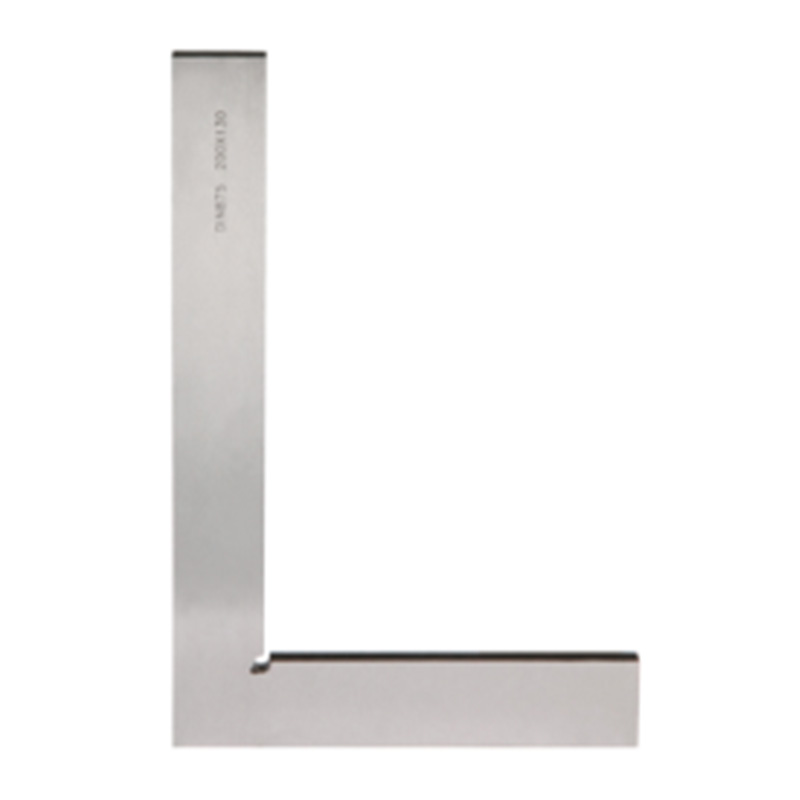
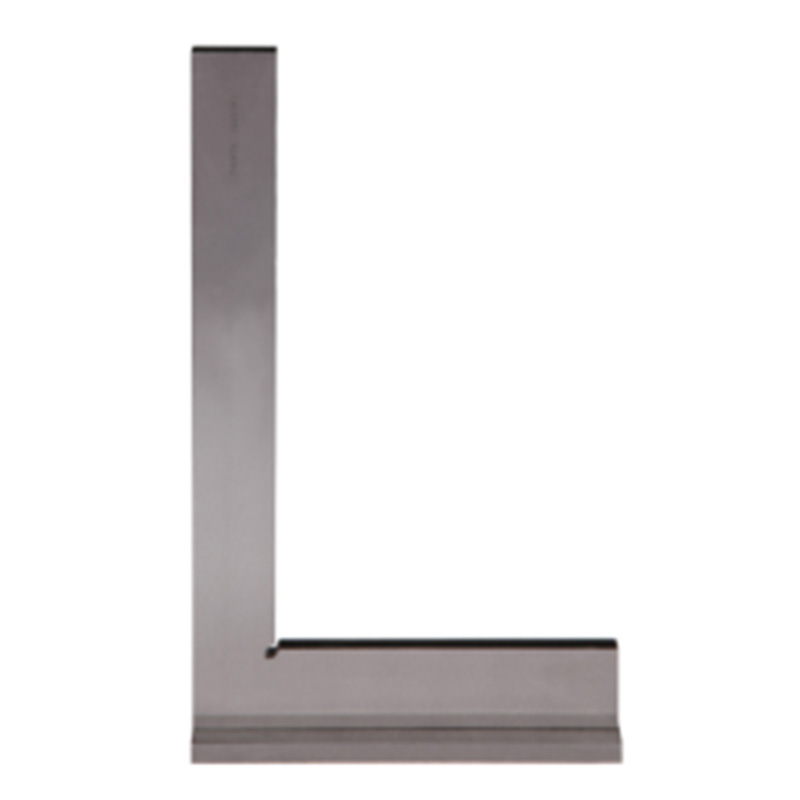
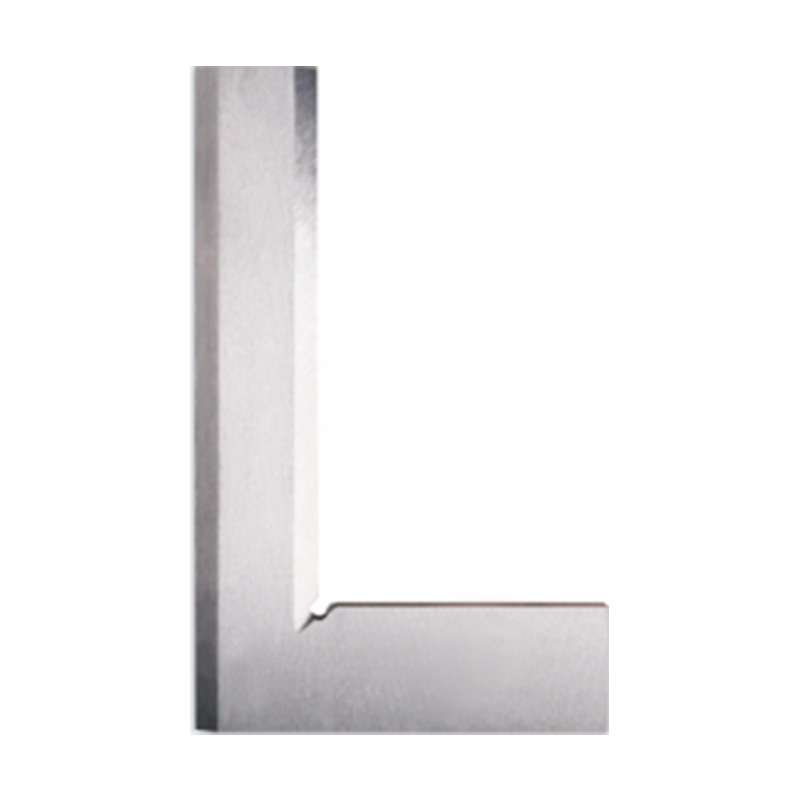
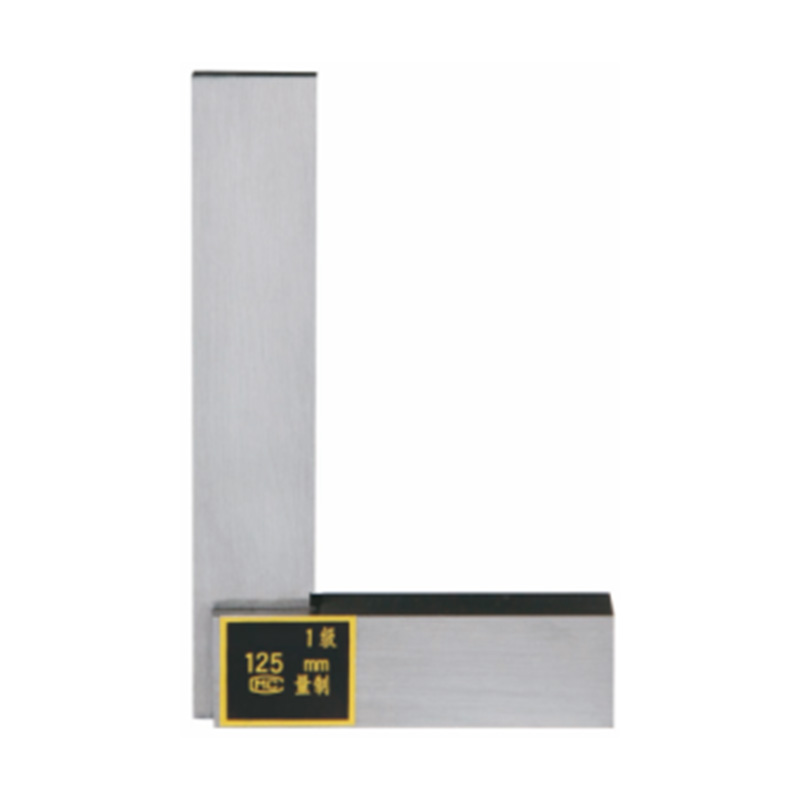
The Design and Manufacturing Process of DIN 875 Squares
The design of DIN 875 Square starts with a deep understanding of the specific functions the tool needs to serve, along with adherence to international standards. The DIN 875 standard specifies the precise tolerances, geometrical dimensions, and overall structure for these squares, ensuring that the tool meets the highest industry expectations. We, at Hangzhou Jinnan Tools & Measure Co., Ltd., emphasize that every square we produce must adhere to these rigorous specifications in order to achieve optimal performance.
When initiating the design phase, we consider factors like the square’s intended application, the precision required, and the materials used. The goal is to design a square that can provide accurate right-angle measurements consistently over time, without significant wear or distortion. This is essential for industries where geometric accuracy is crucial, such as metalworking, precision machining, and assembly lines.
Our design team works closely with engineers to review the tools’ dimensions, checking for alignment, squareness, and overall performance under different working conditions. They also use advanced computer-aided design (CAD) software to model the square, allowing us to test and refine the design virtually before moving forward with production. In addition, the design process considers the ease of use, ergonomics, and long-term durability of the square. Throughout the design phase, our primary aim is to create a tool that is not only precise but also practical and long-lasting. By combining deep industry knowledge and advanced design techniques, we ensure that our DIN 875 Squares are suitable for the most demanding industrial applications.
The material selected for the construction of a DIN 875 Square plays a critical role in the overall performance and longevity of the tool. The material must exhibit a high degree of rigidity and resistance to wear, as well as the ability to maintain its shape under stress. We, at Hangzhou Jinnan Tools & Measure Co., Ltd., carefully choose high-grade steel for all of our DIN 875 Squares, as it offers the necessary properties for precision tools.
Steel is chosen because it provides the ideal balance of strength, hardness, and durability. Specifically, we select materials with a controlled carbon content to ensure the required hardness after heat treatment. The steel used in our DIN 875 Squares is sourced from trusted suppliers who guarantee high-quality raw materials. We do not compromise on the grade of steel used because we know that the performance of our tools depends on it. In addition to the quality of the raw material, we also consider factors like corrosion resistance and fatigue strength. Our engineers work to ensure that the material’s composition is suitable for the specific needs of the tool. For example, during the heat treatment process, the material undergoes a controlled process to increase hardness while maintaining the ability to absorb impact without cracking or losing shape.
Through this careful selection process, we ensure that our DIN 875 Squares are not only highly precise but also durable and resistant to wear. This guarantees that our customers can rely on our tools for long-term, accurate measurements, even under the harshest working conditions.
Precision engineering is at the heart of manufacturing high-quality DIN 875 Squares. The transition from raw materials to a finished product involves highly sophisticated machining processes that are carried out with incredible precision. At Hangzhou Jinnan Tools & Measure Co., Ltd., we use advanced CNC (Computer Numerical Control) machinery to ensure that every component of our DIN 875 Squares meets strict tolerances. Our CNC machines are capable of making intricate cuts with remarkable accuracy, ensuring that the angles and dimensions are precisely to specification. This level of precision is critical because any minor deviation could affect the tool’s ability to measure right angles correctly. The CNC process allows us to manufacture parts with high repeatability, making it possible to produce large quantities of squares with consistent quality.
Once the initial shape of the square is formed, manual fine-tuning is performed to refine the angles and smooth the surfaces. The goal of this step is to ensure that every corner of the square is perfectly square and every edge is free from imperfections. Our engineers closely monitor each machine to ensure that all adjustments are made with precision, guaranteeing that the finished tool will be flawless.
By integrating CNC machining with manual adjustments, we combine the best of both worlds: automated precision and the human touch. This ensures that every DIN 875 Square that leaves our facility has undergone the highest level of craftsmanship, capable of delivering the accuracy required in professional applications.
Heat treatment is an essential process for achieving the desired hardness and durability of DIN 875 Squares. During this stage, the steel undergoes a carefully controlled heating and cooling process that changes its molecular structure, enhancing its strength and wear resistance. At Hangzhou Jinnan Tools & Measure Co., Ltd., we utilize advanced heat treatment techniques to ensure that our DIN 875 Squares are built to last.
The process begins by heating the steel to a specific temperature where the metal becomes more malleable. This allows us to shape the steel into the desired form. After reaching the optimal temperature, the steel is rapidly cooled, usually in oil or air, to lock in the hardness and strengthen its surface. This process is repeated in some cases to achieve even higher levels of hardness and toughness. Our engineers closely monitor every stage of the heat treatment process to ensure that the steel maintains the necessary properties, such as hardness, strength, and resistance to wear. The goal is to achieve a balanced combination of these characteristics, as an overly hard surface can lead to brittleness, while insufficient hardness can lead to premature wear.
After the heat treatment, the steel is subjected to additional testing to ensure that it meets the desired hardness and strength specifications. This ensures that our DIN 875 Squares are robust, long-lasting, and capable of maintaining their accuracy over time, even under heavy use.
The accuracy of a DIN 875 Square is directly tied to its ability to measure true right angles. After the initial manufacturing process is complete, we conduct a rigorous precision measurement and calibration phase to ensure that each square adheres to the strict tolerances required by the DIN 875 standard. This process involves the use of advanced measuring equipment and techniques to confirm that each square is perfectly aligned.
At Hangzhou Jinnan Tools & Measure Co., Ltd., we use high-precision coordinate measuring machines (CMMs), laser scanning systems, and other state-of-the-art tools to check the square’s angles and dimensions. These systems allow us to perform measurements with micrometer-level accuracy, ensuring that the right angle is precisely 90 degrees, and all other dimensions conform to specifications.
Calibration is also performed at this stage to correct any minor deviations that may have occurred during the manufacturing or heat treatment process. Each square is measured against known standards to ensure that it will deliver accurate results when used in real-world applications. We calibrate each tool individually, performing tests multiple times to confirm that it meets the required standards. The process of precision measurement and calibration is critical to our commitment to producing DIN 875 Squares that are not only durable but also capable of delivering reliable, repeatable measurements in any industrial setting.
Surface finishing plays a crucial role in both the aesthetics and functionality of DIN 875 Squares. A smooth, polished surface ensures that the tool operates smoothly, with no friction or resistance that could impact its precision. It improves the durability of the square, making it resistant to corrosion and wear.
We at Hangzhou Jinnan Tools & Measure Co., Ltd. employ advanced polishing techniques to achieve a smooth, mirror-like finish on all our DIN 875 Squares. This polishing process removes any rough edges or imperfections, ensuring that the square not only looks professional but also functions optimally in the field. In addition to aesthetic improvement, surface finishing is critical for ensuring the longevity of the square. We apply protective coatings that shield the square from rust and corrosion. This is particularly important when our DIN 875 Squares are used in environments with high humidity or exposure to chemicals, as these conditions can quickly degrade the quality of unprotected tools.
The final step in surface finishing is a thorough inspection of the square. We check for any scratches, marks, or defects that could affect its functionality. Only after ensuring that every square is flawless does it move on to the next stage in the manufacturing process.